

Species and Populations
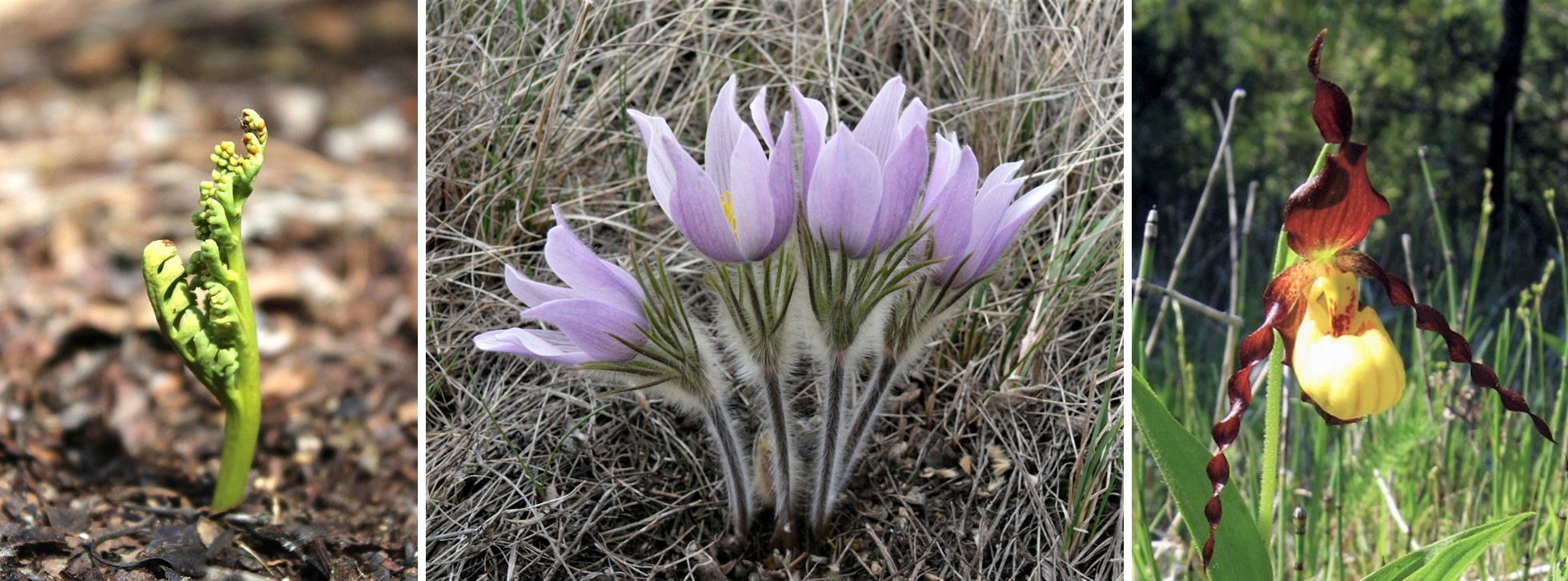
We investigate the taxonomy, diversity, ecology, and conservation of vascular plants, where most of our studies focus on flagship and threatened species. Our work on species prioritization integrates historic and current distribution data, habitat characteristics, and vulnerability assessments to guide effective conservation planning. Our studies explore how environmental pressures and land-use change affect population dynamics and long-term species persistence. We work to develop evidence-based frameworks for prioritizing plant conservation.
Featured Research
Kricsfalusy V. 2026. Conservation of threatened vascular plants in intensive agricultural landscapes in Canada. Nature Conservation 63: 37–57. https://doi.org/10.3897/natureconservation.63.177517
Kricsfalusy V. 2021. Distribution, habitat affinities and conservation of prairie moonwort (Botrichium campestre) on its northern range limit. Western North American Naturalist, 81(4): 529–543. https://doi.org/10.3398/064.081.0405
Esparrago J., Kricsfalusy V. 2015. Traditional grassland management and surrounding land use drive the abundance of a prairie plant species in an urban landscape. Landscape and Urban Planning, 142: 1–6. https://doi.org/10.1016/j.landurbplan.2015.04.006
Kricsfalusy V., Trevisan N. 2014. Prioritizing regionally rare plant species for conservation using herbarium data. Biodiversity and Conservation, 23: 39–61. https://doi.org/10.1007/s10531-013-0583-4
Habitats and Ecosystems
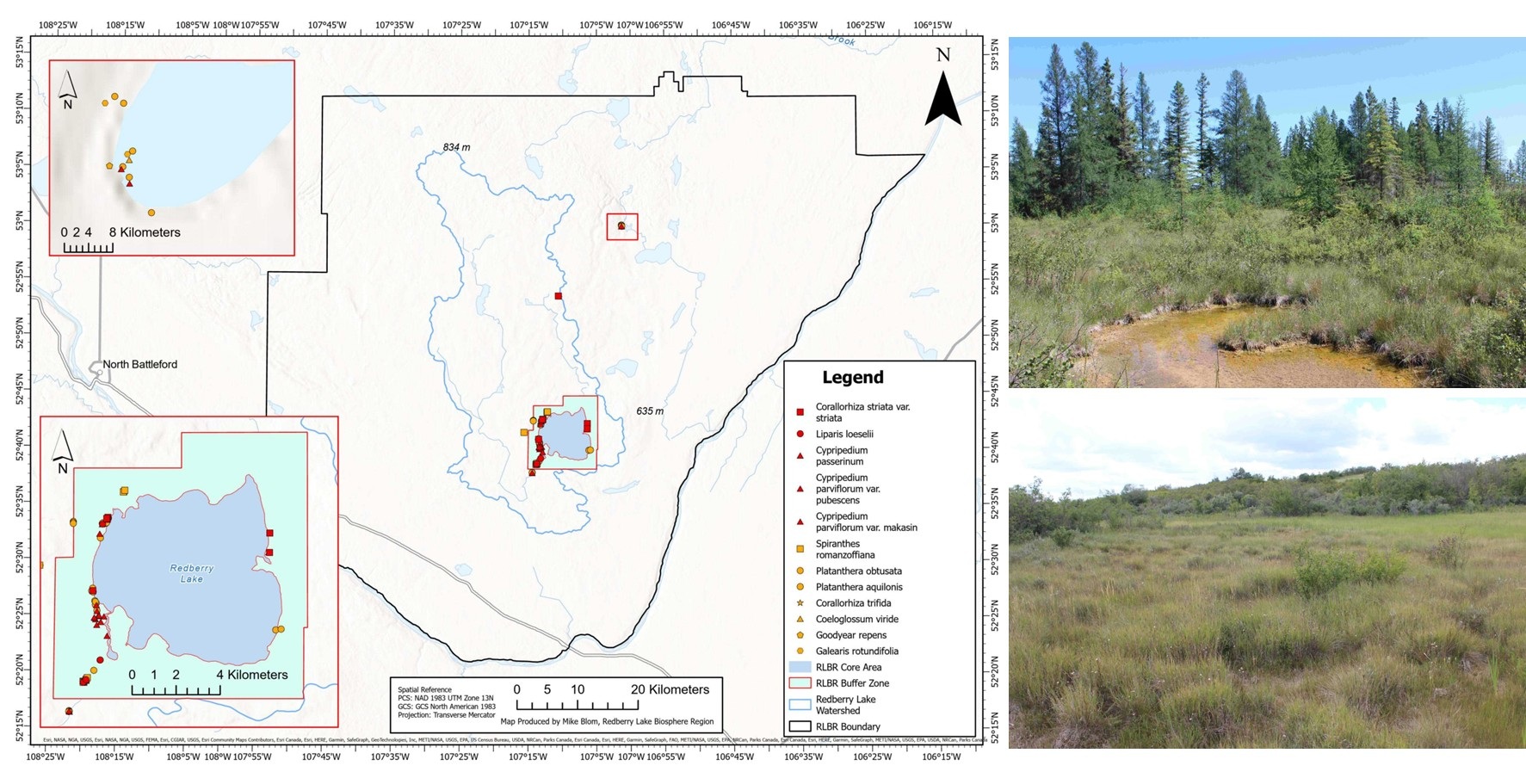
Our research group studies temperate grasslands across complex prairie-wetland landscapes. Much of our work takes place in the Redberry Lake Biosphere Region and other conservation areas in Saskatchewan, where we examine native and non-native vascular flora, documenting rare and invasive alien species to understand how they influence habitat dynamics and ecological resilience. We develop ecological land classifications using all major components of ecosystems to enable the production of integrated data for high conservation value areas.
Read more about our activities at the Redberry Lake Biosphere Region.
Featured Research
Kricsfalusy V., Enan S., Jonson A., Osei P., Stittrich F., Ulrich K. 2026. A proposed Important Plant Area as a tool for conserving threatened plants and habitats in the Redberry Lake Biosphere Region, Saskatchewan. The Canadian Field-Naturalist, 139(3): 215-226. https://doi.org/10.22621/cfn.v139i3.3595
Kricsfalusy V. 2026. The native flora of the Redberry Lake Biosphere Region (Saskatchewan, Canada): taxonomy, biogeography, habitats, and conservation. Nordic Journal of Botany: e04865. https://doi.org/10.1002/njb.04865
Kricsfalusy V. 2023. The non-native flora of Redberry Lake Biosphere Reserve, Canada. Thaiszia Journal of Botany, 33(1): 45–61. https://doi.org/10.33542/TJB2023-1-03
Kricsfalusy V., Kindrachuk J. 2023. Orchids of the Redberry Lake Biosphere Region: Diversity, distribution, habitats and conservation. Blue Jay, 81(3): 11–21. https://doi.org/10.29173/bluejay6376
Big Data Analytics
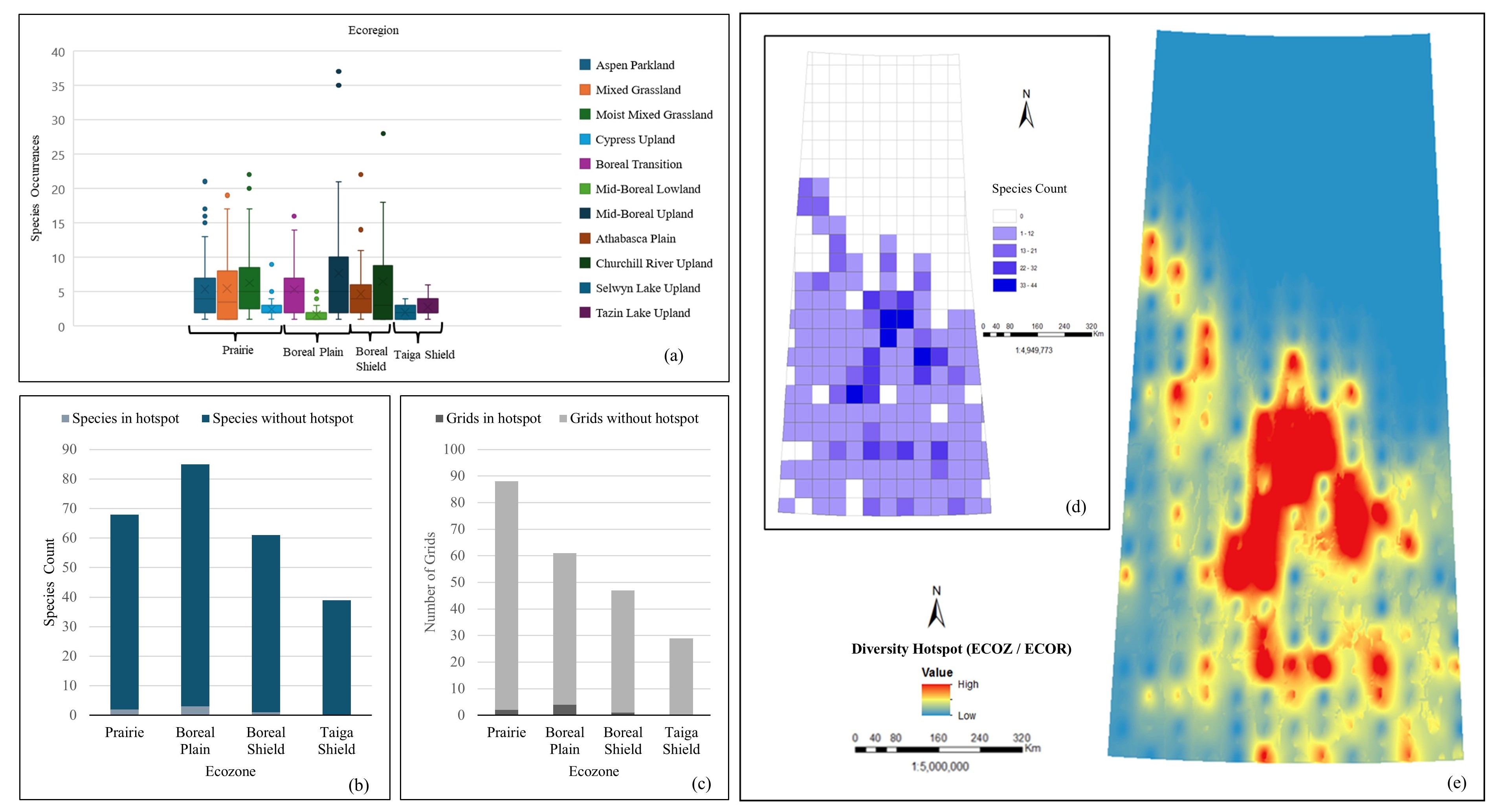
Our research applies geospatial modeling to study plant diversity and distribution at regional and continental scales. We use extensive herbarium records, field survey data, climatic variables, topographic and edaphic data, land cover information, protected area and conservation databases, along with species distribution modeling, to evaluate habitat suitability, environmental factors, predict species range shifts under climate change, and conduct conservation gap analysis. This integrative approach allows us to identify priority species and habitats for conservation planning, strengthening science-based adaptive management strategies.
Featured Research
Kricsfalusy V., Chakma K. 2025. Prediction of potential habitat distributions and climate change impacts on six Carex L. species of conservation concern in Canada. Conservation, 5(4): 55. https://doi.org/10.3390/conservation5040055
Kricsfalusy V.V., Godfrey A., Chakma K., Stewart A., Danylyk I.M. 2025. Evaluating the diversity, distribution patterns and habitat preferences of Carex species (Cyperaceae) in western Canada using geospatial analysis. Biodiversity Data Journal, 13: e144840. https://doi.org/10.3897/BDJ.13.e144840
Kricsfalusy V., Li M., Gupta Ch. 2015. Using multiple data sources on species distribution for biodiversity assessment: The prairie crocus (Anemone patens) as a case study. Blue Jay, 73(3): 102–122. https://doi.org/10.29173/bluejay223
Environmental Education
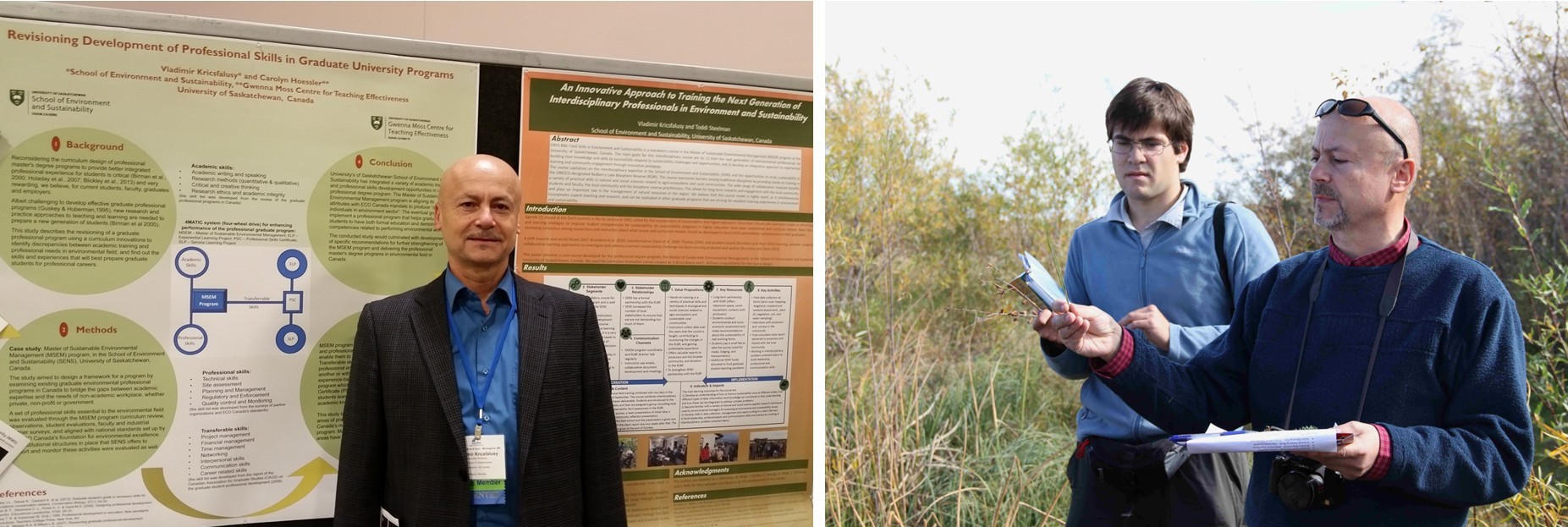
This bifaceted research makes important contributions to the revisioning graduate professional programs and designing interdisciplinary problem-based field courses. We focus on using curriculum innovations in professional programs to identify discrepancies between academic learning and professional needs in environmental field and find out the skills and experiences that will best prepare graduate students for their careers. We are constantly improving the field interdisciplinary courses to train the next generation of environmental professionals by building their knowledge and skills to successfully respond to sustainability challenges and opportunities.
Featured Research
Kricsfalusy V., Gorge C., Reed M. 2018. Integrating problem- and project-based learning opportunities: Assessing outcomes of a field course in environment and sustainability. Environmental Education Research, 24(4), 593–610. https://doi.org/10.1080/13504622.2016.1269874
Kricsfalusy V., Zecevic A., Assanand S., Bigelow A., Gaudet M. 2016. The frontiers of service-learning at Canadian universities. Engaged Scholar Journal: Community-Engaged Research, Teaching and Learning, 2(2), 87–102. https://doi.org/10.15402/esj.v2i2.173
Kricsfalusy V., Steelman T. 2015. An innovative approach to training the next generation of interdisciplinary professionals in environment and sustainability. In: 10th Annual Conference of the Association for the Advancement of Sustainability in Higher Education (AASHE), Minneapolis, MN, October 25–27, 2015. https://doi.org/10.13140/RG.2.2.36270.37440
