

About Us
Métis and First Nations people across Saskatchewan are strong leaders in creating positive changes in health care delivery, and in addressing health and social disparities experienced by their communities. Research is central to their efforts.
The SK-NEIHR supports First Nations and Métis health research through a number of activities, all developed to address barriers that can prevent Indigenous stakeholders from participating in research. These barriers—including geographic location, lack of staff capacity, and a lack of local and regional infrastructure—and ways to address them were identified through an extensive community consultation process with our partners and advisory councils.
nātawihowin & mamawiikikayahk networks
mamawiikikayaahk
The Métis network, mamawiikikayaahk (“healing together” in Michif) is the first Métis-specific health research network in Saskatchewan. Under the leadership of the SK-NEIHR and Métis-Nation Saskatchewan’s Ministry of Health, the mamawiikikayaahk network supports researchers, students, and Métis health leaders and communities.
While we were developing this network, Elder Norman Fleury provided Dr. Robert (Bobby Henry) with the name mamawiikikayaahk for the Métis Network, which means healing together in Michif, and is rooted in health, healing and Métis concepts of reciprocity and how we can give back and heal as a nation.
nātawihowin
The First Nations network, nātawihowin (“art of self-healing” in Cree) is the only First Nations-specific health research network in Saskatchewan. Under the leadership of the SK-NEIHR and FSIN’s Health and Social Development Commission, the nātawihowin network supports researchers, students, and First Nations health leaders and communities.
When we were developing this Network, following the protocols of the Cultural Responsiveness Framework, Dr. JoLee Sasakamoose and Mr. Martin Bembridge (FSIN) gave cloth and tobacco to traditional bundle keeper, Alex Ahenakew, Ahtahkakoop First Nation, the second generation of Elders to work with the Cultural Responsiveness Framework. Mr. Ahenakew provided the name, nātawihowin for the First Nations network, which means “the art of self-healing” or to “seek out healing” in Cree, with a deeper meaning for our network of the convergence of Western ways with Indigenous ways coming together to support each other’s healing.
Research Leadership Team
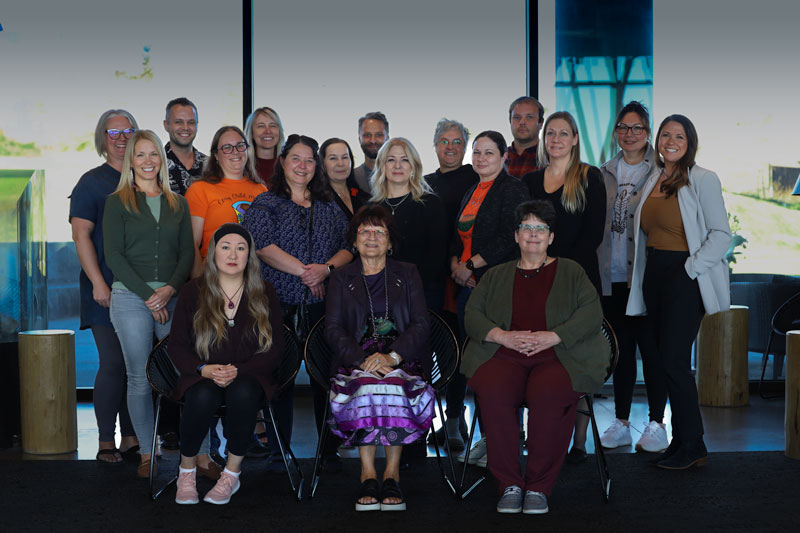
The nātawihowin and mamawiikikiyaahk Research, Training and Mentorship Network team supports community stakeholders and researchers in respectful research relationships. This network has over 100 members from across Saskatchewan and beyond.
The Research Leadership Team is made up of fifteen Indigenous and non-Indigenous faculty working in Indigenous health and wellness. Click below to read about each team member.
Annual Reports
Evaluation is a key part of the Saskatchewan NEIHR, and we work with an external evaluator to gather data on the impact we are having. Information on our activities and their impact is included in our Annual Reports, found below.