

Supporting Saskatchewan's Future Indigenous Health Researchers
What's the SK-NEIHR Innovation Academy? The SK-NEIHR Innovation Academy is an annual, week-long gathering created and hosted by SK-NEIHR to support student researchers working in First Nations and Métis health research.
What is the SK-NEIHR Innovation Academy?
The SK-NEIHR Innovation Academy is an annual, week-long gathering created and hosted by SK-NEIHR to support student researchers working in First Nations and Métis health research. Designed as an immersive and collaborative learning experience, the Innovation Academy brings together students, researchers, Knowledge Keepers, and community leaders to explore approaches to research that are ethical, community-centered, and grounded in First Nations and Métis ways of knowing.
The First SK-NEIHR Innovation Academy
In 2025, SK-NEIHR hosted its first-ever Innovation Academy. Over the course of the week, students engaged in discussions on Indigenous data sovereignty, distinctions-based approaches, and leading practices in Indigenous health research in Saskatchewan. Through a combination of classroom learning, cultural teachings, and land and community-based experiences, participants were able to deepen their understanding while building meaningful connections with peers and mentors.
Learning from Indigenous Leaders and Knowledge Keepers
Students consistently highlighted the impact of learning directly from Indigenous leaders, Knowledge Keepers, and researchers. These experiences, whether through panels, storytelling, or cultural teachings, helped ground academic concepts in lived experiences and connect them to community priorities.
Building Relationships and Community in Indigenous Health Research
A strong theme across student reflections was the importance of relationships. The Innoation Academy created space for connection between Indigenous and non-Indigenous students, many of whom continue to stay in touch long after the program ended. This sense of community extended into collaborative case study work and shared experiences throughout the week.
Land-Based and Cultural Learning Experiences
Land-based and cultural learning were central to the experience. Visits to places such as Wanuskewin and the Gabriel Dumont Institute, along with participation in talking circles and shared meals, provided opportunities to connect learning to place, culture, and community. For many students, these moments became the most meaningful and memorable parts of the week.
Student Reflections on the Innovation Academy
Let’s turn to the students and see what they had to say about their favourite experience were from the SK-NEIHR Innovation Academy:
- “The deep dive into Indigenous data governance and sovereignty, distinction-based approaches, including Métis data principles and Inuit research frameworks. This valuable information expanded my understanding of how data should be handled in ways that respect community rights and priorities. I also greatly benefited from completing the OCAP® training sponsored by the SK-NEIHR after the academy, which reinforced and deepened what I learned during the academy.”
- “Learning directly from Indigenous leaders, Knowledge Keepers, and researchers. Hearing their experiences, stories, and guidance, whether through panels, storytelling sessions, or cultural teachings, made the learning feel grounded, meaningful, and community-centered.”
- “The collaborative, immersive environment. Working in case study groups, visiting places like Wanuskewin and the Gabriel Dumont Institute, and connecting with peers created a strong sense of community and made the week exciting, engaging, and inspiring.”
- “One of the most meaningful parts of the experience was building relationships with both Indigenous and non-Indigenous scholars and students. It was so valuable to connect with people who share similar interests and goals. Even nearly a year later, I continue to maintain many of these relationships, which speaks to the lasting impact of the academy.”
- “I really appreciate the emphasis on a distinctions-based approach. Too often, Indigenous research and perspectives are generalized and grouped into one category, without recognizing the unique cultures and histories of different groups. The Innovation Academy made a clear effort to ensure that learning reflected these distinctions, which deepened my understanding and approach to this work.”
- “The integration of cultural and land-based learning was incredibly meaningful. Experiences such as talking circles, shared meals, and our day at Wanuskewin helped ground the learning. When I reflect on what I learned, I often connect it back to these moments.”
- “Learning about Indigenous data sovereignty, including First Nations, Métis, and Inuit perspectives.”
- “Learning about and getting examples of good research practices.”
- “Joining and learning more about the SK-NEIHR community and connecting with other graduate students.”
Distinctions-Based Approaches in Indigenous Research
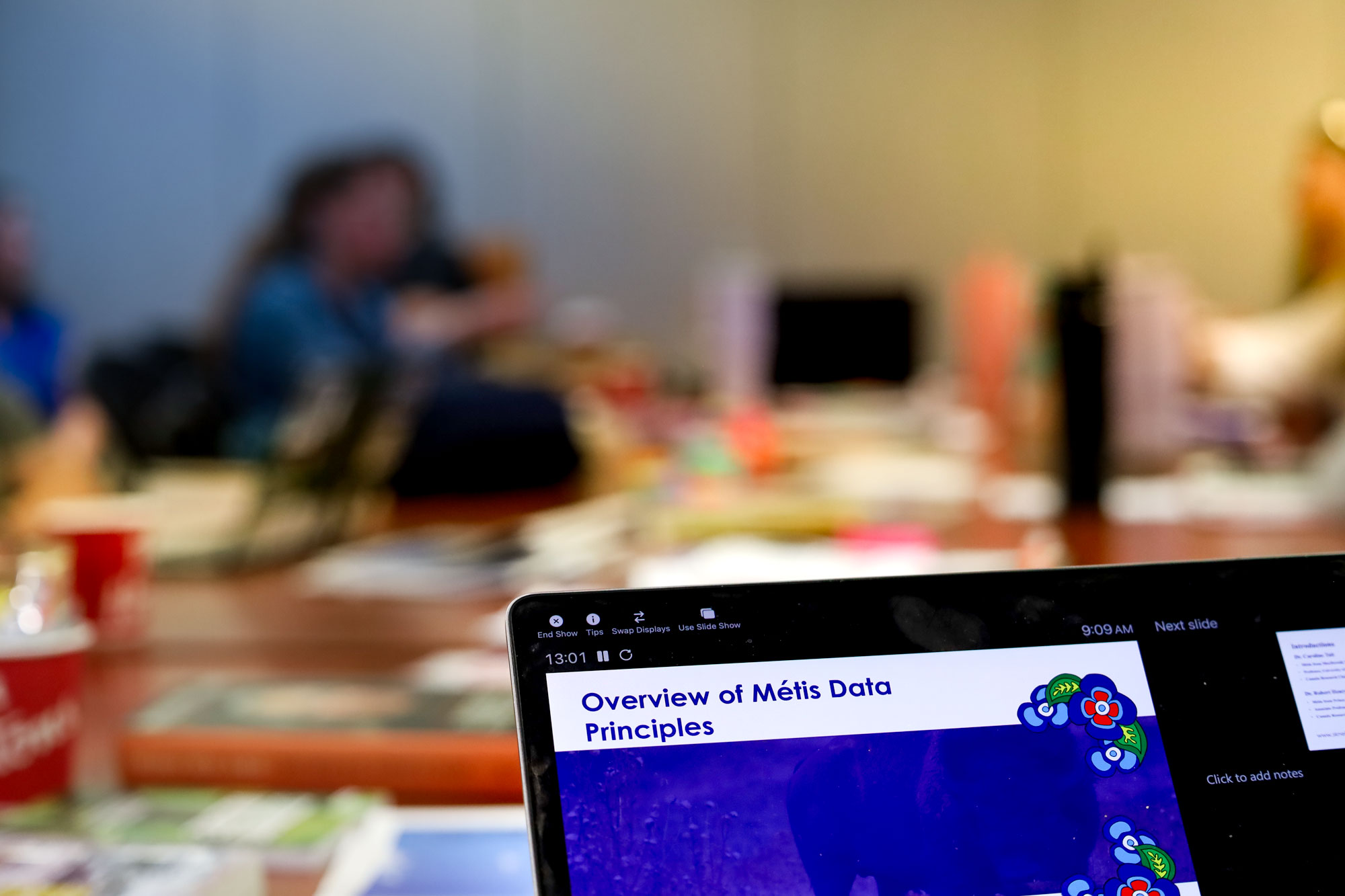
Students also emphasized the value of distinctions-based learning. Rather than approaching First Nations and Métis health research as a single, unified field, the Academy highlighted the unique perspectives and frameworks of First Nations, Métis, and Inuit communities. This approach helped participants better understand the diversity of Indigenous experiences and strengthened their ability to conduct respectful and relevant research.
Supporting the Next Generation of Indigenous Health Researchers
The SK-NEIHR Innovation Academy continues to grow as a space where emerging researchers can learn, connect, and build the skills needed to support Indigenous health research in meaningful ways. By centering Indigenous knowledge systems, community priorities, and relationship-building, the Innovation Academy is helping to shape a new generation of researchers committed to respectful and impactful work.