

EcoShores
Enhancing Coastal Climate Resilience Through Nature-Based Solutions
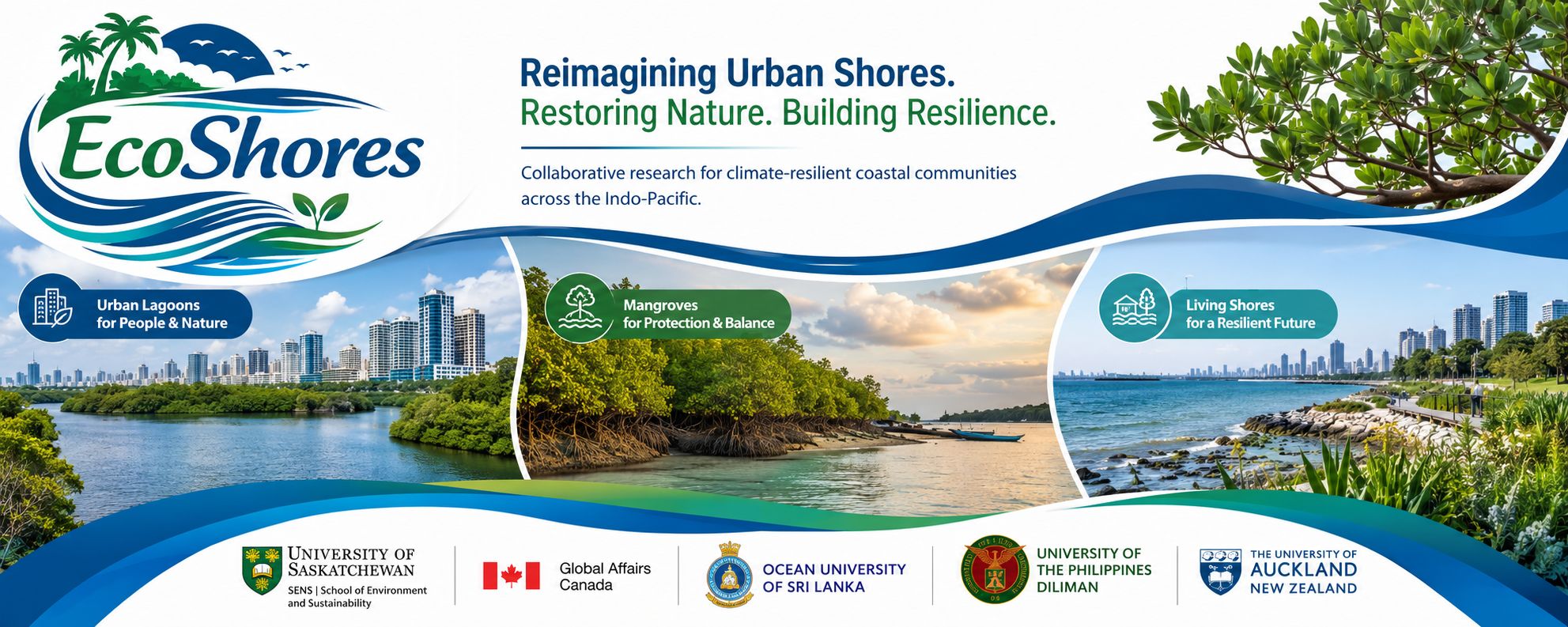
Coastal communities across the Indo-Pacific are increasingly facing the impacts of climate change, including sea-level rise, coastal erosion, flooding, habitat loss, and pressure from rapid urban development. EcoShores responds to these challenges by connecting Canadian graduate students, faculty, and regional partners through applied research, training, and knowledge sharing.
Nature-based solutions use the protective and restorative functions of ecosystems to address environmental and social challenges. Through the restoration and management of urban lagoons, mangroves, and living shorelines, EcoShores explores how coastal ecosystems can reduce climate risks while supporting biodiversity, community well-being, and sustainable development.
The project brings together Canadian graduate students, faculty, and international partners to study coastal resilience in diverse regional contexts. By combining applied research, field-based learning, and local knowledge, EcoShores strengthens understanding of how ecological restoration can support climate adaptation in coastal communities.
A key focus of EcoShores is connecting science with practice. Students and researchers work with partner institutions and regional experts to examine real-world coastal challenges, identify restoration opportunities, and share knowledge across countries and communities. This collaborative approach helps build long-term partnerships while supporting the next generation of environmental researchers and practitioners.
Through its focus on urban lagoons, mangrove ecosystems, and living shorelines, EcoShores contributes to broader conversations about sustainable shoreline management, climate adaptation, and ecosystem-based restoration. The project highlights the importance of protecting and restoring coastal environments not only as ecological spaces, but also as vital systems that support people, culture, livelihoods, and resilience.