

Sri Lanka | 2026
Knowledge Exchange: From Water to Sea Guest Lecture Series
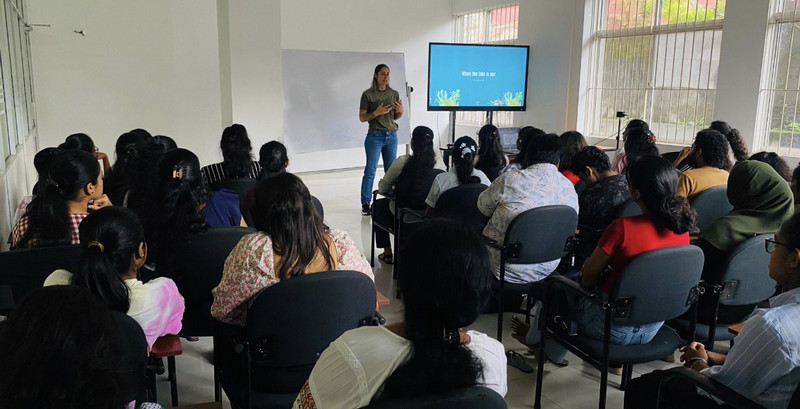
As part of her EcoShores international research placement in Sri Lanka, Katarina “Kat” Duke, PhD candidate at the University of Saskatchewan’s School of Environment and Sustainability, delivered a three-part From Water to Sea Guest Lecture Series in collaboration with the Ocean University of Sri Lanka.
The series brought together students, researchers, and project partners to explore the connections between water, coastal ecosystems, communities, and environmental resilience. Drawing on her research and experience in marine conservation, fisheries, Indigenous water governance, and community-led stewardship, Kat encouraged participants to consider coastal and freshwater environments as interconnected living systems shaped by ecological, cultural, and social relationships.
Across the three sessions, the series explored themes including groundwater and water security, cultural narratives and relationships with water, eelgrass ecosystems, biodiversity, shoreline protection, food security, restoration, and community well-being. Kat also highlighted the importance of Indigenous-led and community-based approaches to environmental stewardship and the role of nature-based solutions in supporting long-term coastal resilience.
One session, “(Re)Storying (Ground)Water Relations: Exploring Myths for Water Security and Well-Being,” examined how stories, cultural narratives, wetlands, and groundwater can influence the ways communities understand and relate to water and place.
Another, “The Future is Candy: Eelgrass — Transitioning to Whole-System Regeneration,” introduced eelgrass as an ecologically and culturally important coastal species and explored its contributions to biodiversity, shoreline protection, water quality, food security, and regenerative approaches to coastal restoration.
Together, the three lectures created opportunities for meaningful knowledge exchange between EcoShores researchers and students and partners at the Ocean University of Sri Lanka, supporting broader conversations around coastal stewardship, water security, nature-based solutions, and climate resilience.
EcoShores extends its thanks to Katarina Duke, Dr. R. Thejani Nilusha, the Ocean University of Sri Lanka, and all participating students and partners for contributing to the success of the series.
Field Research
Katarina Duke
As part of the EcoShores Project, Katarina Duke recently visited the Lanka Mangrove Museum and Learning Centre with a student from the Ocean University of Sri Lanka as part of her field research on mangrove conservation and sustainable ecotourism.
The visit offered an opportunity to explore Sri Lanka’s diverse mangrove ecosystems and learn from local expertise and conservation initiatives. Through the visit, Katarina gained further insight into the connections between biodiversity conservation, community participation, coastal protection, and environmentally responsible tourism.
Katarina’s EcoShores research examines how healthy mangrove ecosystems can help protect vulnerable coastlines while also supporting sustainable tourism and the livelihoods of coastal communities. Her work highlights the important role that nature-based solutions can play in strengthening the resilience of coastal environments to environmental and climate-related pressures.
The field visit also provided an important opportunity for knowledge exchange and field-based learning, connecting academic research with local conservation experience and community-based approaches to mangrove stewardship.
EcoShores is grateful to the Lanka Mangrove Museum and Learning Centre and our partners at the Ocean University of Sri Lanka for supporting Katarina’s research and contributing to this valuable learning experience.
Read more about the visit: https://lankamangrovemuseum.lk/canadian-scholar-and-ocean-university-student-focus-on-mangroves-and-eco-tourism-for-phd-research/
New Zealand | 2026
Exploring Mangroves and Coastal Climate Resilience
Discover the EcoShores research journey in Auckland, New Zealand, featuring University of Saskatchewan graduate student researchers Timi Adelugba and Andrew Batycki.
Under the leadership of Dr. Varuni Jayasooriya and in collaboration with Dr. Iresh Jayawardena at the University of Auckland, this documentary highlights field research, international knowledge exchange, and the role of mangroves and nature-based solutions in strengthening coastal climate resilience.
Watch the documentary below.
Field Research
Timi Adelugba
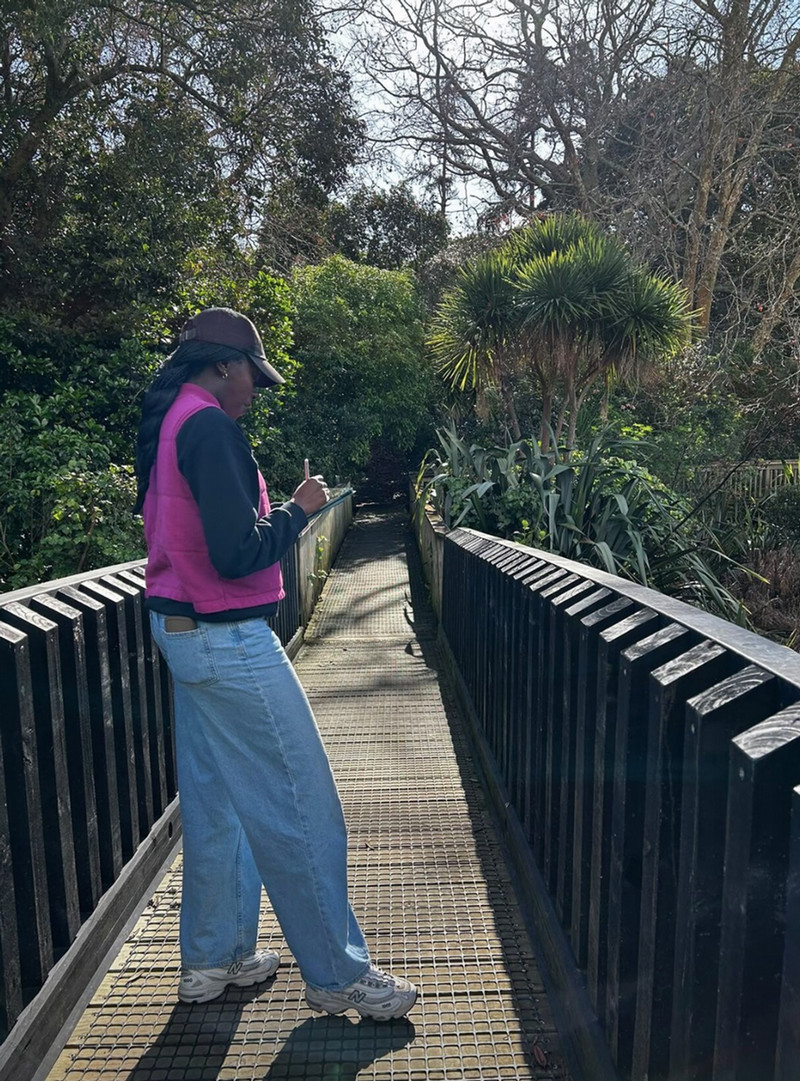
As part of her EcoShores international research placement in New Zealand, Timi Adelugba conducted fieldwork in Auckland to assess the accessibility of mangrove walking trails and surrounding blue-green spaces.
Her research focuses on developing an equity-focused accessibility assessment tool to help researchers and planners better understand how people of different ages, abilities, and backgrounds can safely and equitably access mangrove environments.
Through field observations and accessibility assessments, Timi’s work considers how trail conditions, infrastructure, and other features of the built and natural environment can influence people’s ability to experience and engage with coastal spaces.
By examining accessibility alongside mangrove conservation, her research contributes to broader discussions around inclusive planning, community well-being, and resilient coastal cities, highlighting the importance of ensuring that the benefits of blue-green spaces are accessible to diverse communities.
Field Research
Andrew Batycki
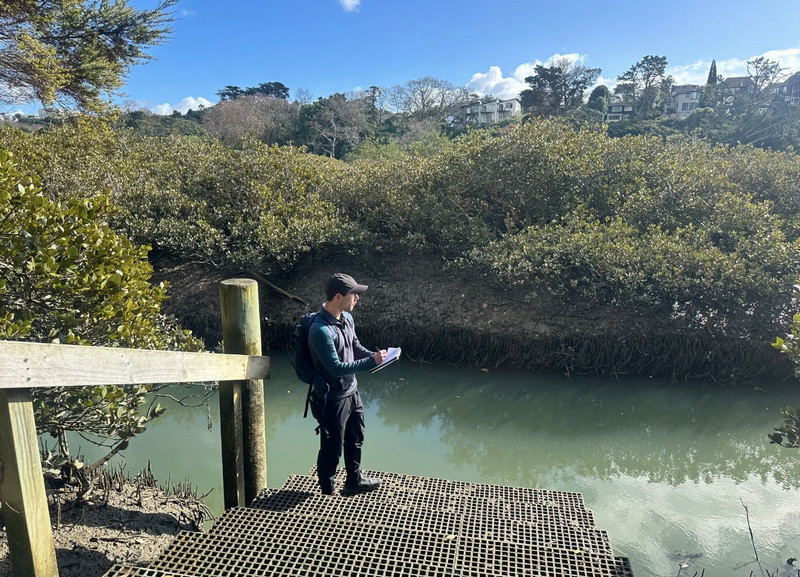
Andrew Batycki’s research in Auckland explores how nature-based solutions can strengthen climate resilience in coastal communities.
Through fieldwork in urban wetlands and mangrove ecosystems, he examines the social, economic, and environmental factors involved in wetland conservation and restoration.
His work aims to support more informed and locally relevant climate adaptation planning by identifying the trade-offs and benefits associated with different restoration approaches.