Stephany Valarezo-Plaza
Electrical and Computer EngineeringPhD student in the Ko Lab, supervised by Prof. Seok-Bum Ko. Her research develops efficient deep learning for edge deployment, spanning crop yield prediction from drone hyperspectral imagery, transformer compression, and combustion instability prediction.
Research
Stephany works on making deep learning models small and fast enough to run where the data is produced, from a drone over a canola field to a transformer on an edge device.
Current project
Grassland Genomics for Greenhouse Gas Mitigation (GG4GHG)
Stephany works on Grassland Genomics for Greenhouse Gas Mitigation, a Genome Canada project estimating how much carbon is stored in soil across Canadian grasslands.
Canadian grasslands cover more than 16 million hectares and play an important role in carbon storage, biodiversity and greenhouse gas mitigation, but grassland loss and management practices affect how much carbon they hold. Soil organic carbon is a key indicator of soil health, showing how effectively grasslands retain carbon while supporting fertility, productivity and resilience.
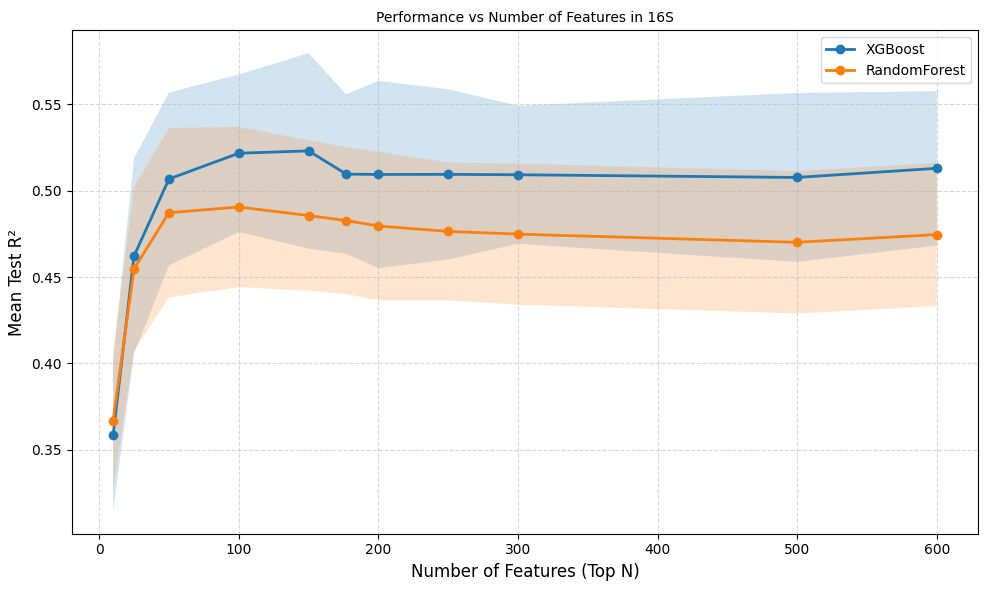
- Combines microbial sequencing and environmental data with machine learning and feature selection to predict soil organic carbon
- Identifies the main biological and environmental drivers of carbon storage
- Explores graph-based models to represent interactions among microbes, plants, soil and climate
Publications
Optimized deep learning for canola yield prediction on edge devices
S. Valarezo-Plaza, J. Torres-Tello, K. D. Singh, S. J. Shirtliffe, S. Deivalakshmi, et al. IEEE Transactions on AgriFood Electronics, 2(2), 436-444, 2024.
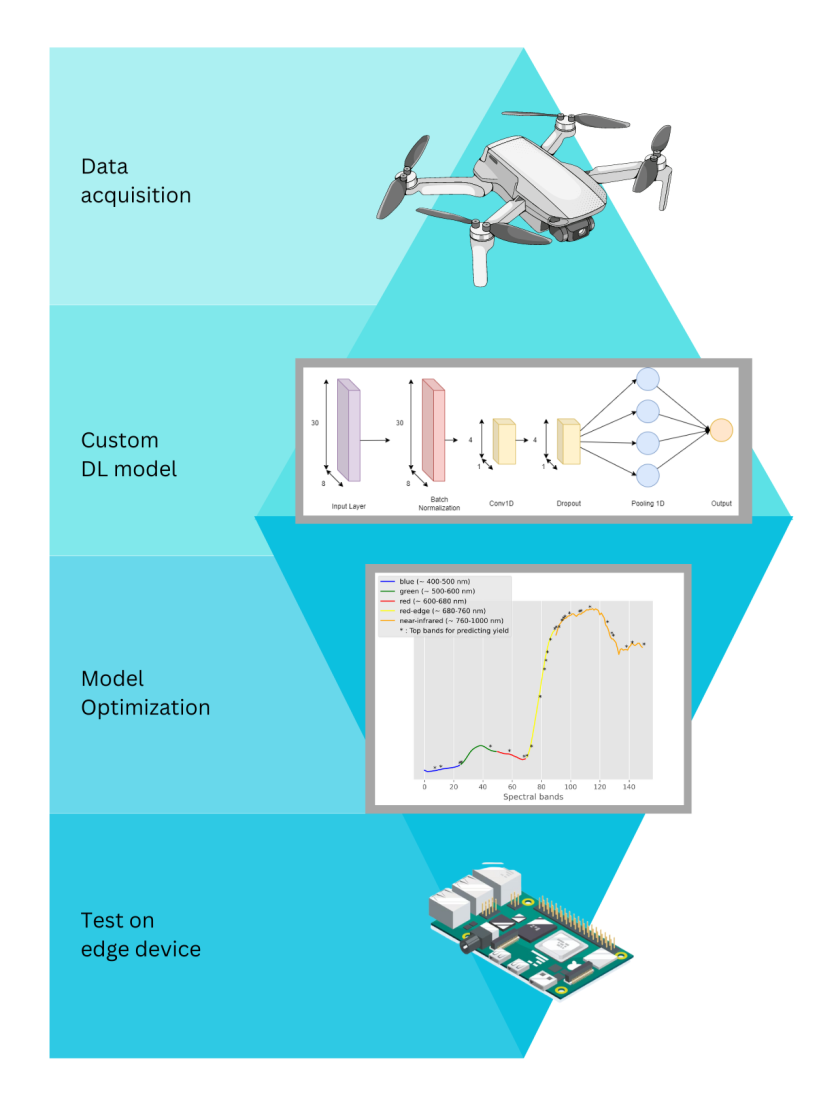
- Predicts canola yield from drone-captured hyperspectral imagery across 150 bands and eight dates
- Feature selection, pruning and quantization shrink the model until it runs on an edge device in the field
Optimized transformer models: pruning and quantization for the edge
M. H. Haider, S. Valarezo-Plaza, S. Muhsin, H. Zhang, S.-B. Ko. IEEE International Symposium on Circuits and Systems (ISCAS), 2024.
- Tests whether pruning and quantization designed for CNNs carry over to transformers, whose computation patterns differ
- Large compression gains while transformer accuracy holds
FFT-based deep learning for combustion instability prediction
S. Valarezo-Plaza, A. Erazo, M. H. Haider, J. Bae, P. Canteenwalla, S. Yun, et al. International Journal of Hydrogen Energy, 2026.
- Works in the frequency domain to predict combustion instability efficiently