

About This Research Area
Efficient AI is not enough if it cannot be trusted. We build hardware for privacy-preserving computation, lightweight intrusion detection, and cryptography on resource-constrained devices.
Privacy-preserving AI hardware
About the Project
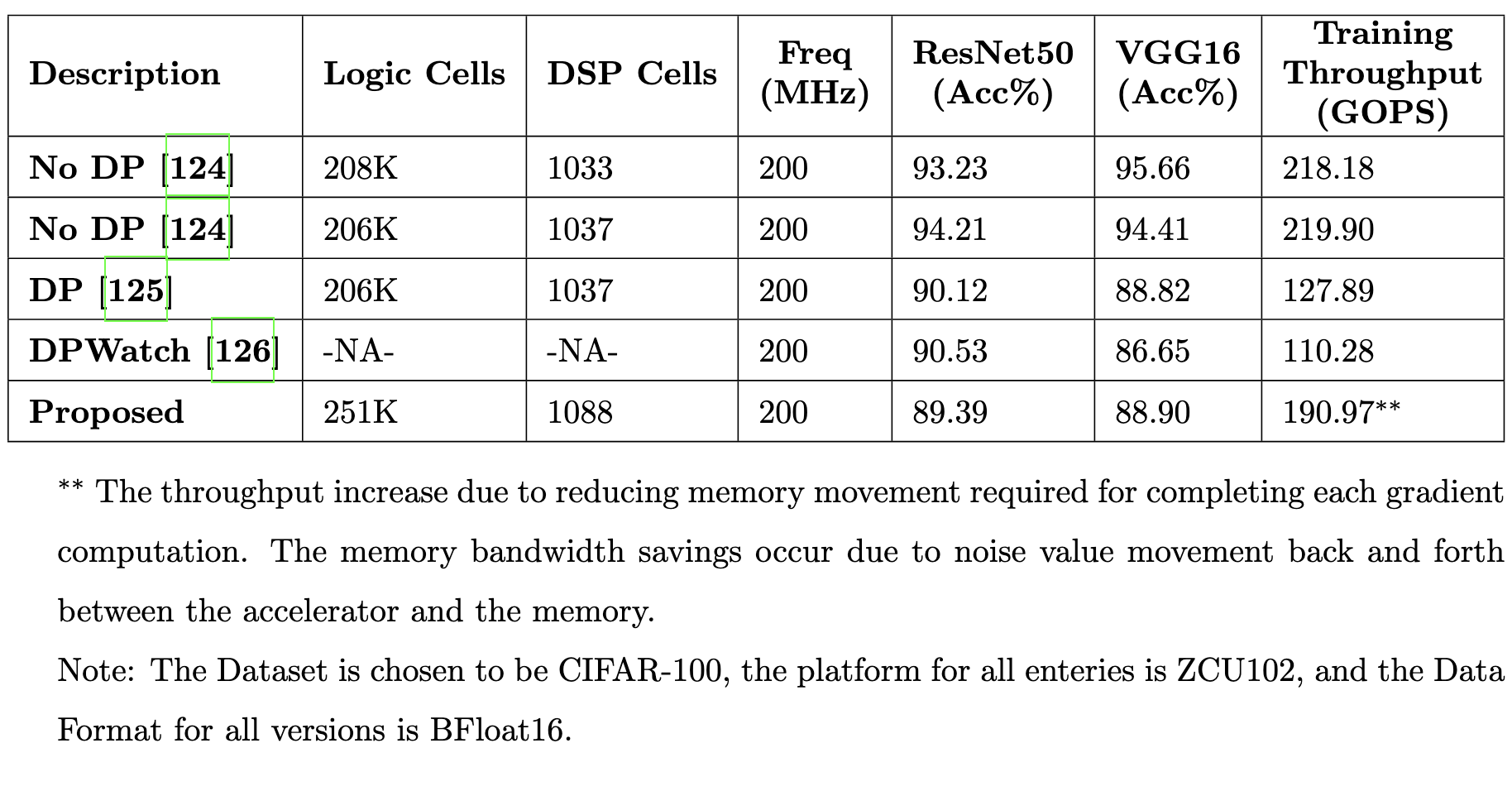
Differential privacy protects training data by adding calibrated noise — but generating that noise in software is slow, and moving it around costs memory bandwidth.
- Gaussian noise generated directly in hardware by exploiting circuit metastability
- Paired with precision-aware multipliers
- Privacy comes at almost no throughput cost
Haider, Kim, Zhang, Arias-Garcia, Lee and Ko, IEEE APCCAS, 2025.
LightIDS: lightweight intrusion detection
About the Project
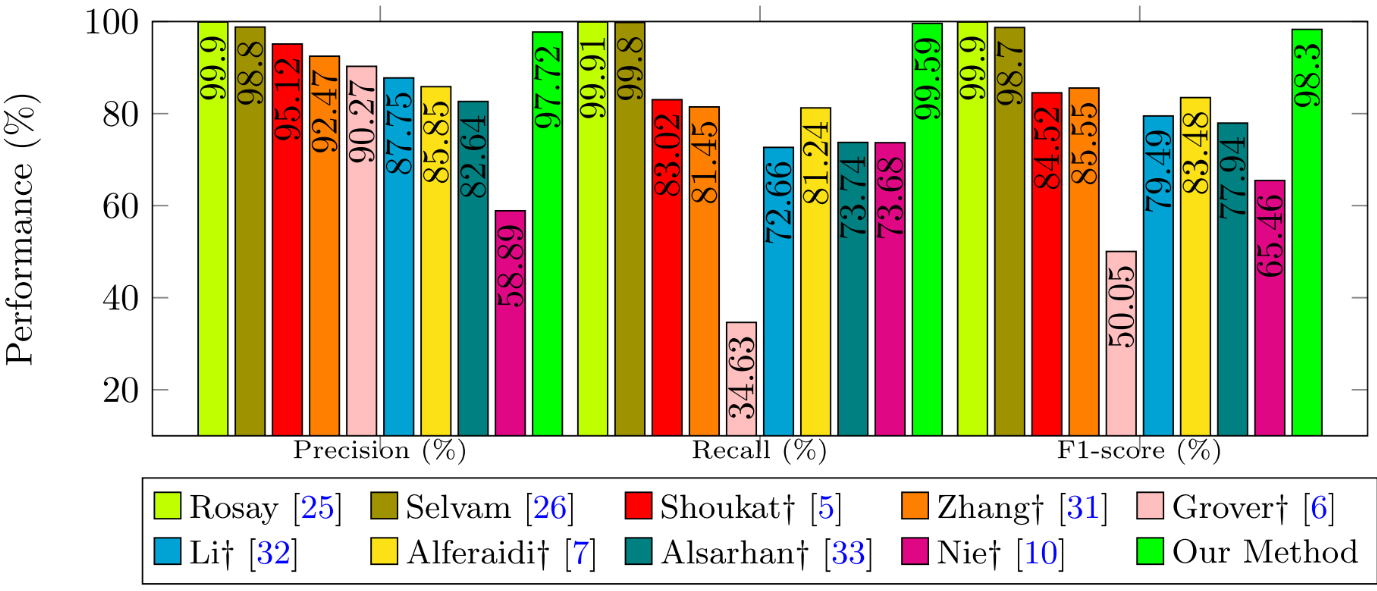
Network intrusion detection usually means large models running on servers. LightIDS is an abstracted, high-precision deep neural network small enough to run in constrained settings.
- Small enough for edge and embedded deployment
- Competitive with much heavier published systems
- Evaluated on the CIC-IDS2017 benchmark
Fard, Soltani, Jahangir and Ko, The Journal of Supercomputing, 2025.
Cryptographic hardware
About the Project
The group has a long line of work on cryptographic circuits, aimed at devices where area, power and throughput are all constrained at once.
- High-throughput and area-efficient AES implementations
- Nano-AES for IoT devices where area and power are scarce
- Post-quantum cryptosystems for resource-constrained hardware