-
- Salmonella is a rod-shaped, gram-negative bacteria of the family Enterobacteriaceae
- S. enterica can be further broken down into 6 subspecies and over 2,600 serotypes
- Divided into two broad groups:
- Typhoidal
- Non-typhoidal
- Non-typhoidcal S. Enteritidis and S. Typhimrium (ST) are important diseases causing serotypes is in both humans and chickens
- Salmonella are among the leading pathogens responsible for foodborne diseases in humans worldwide
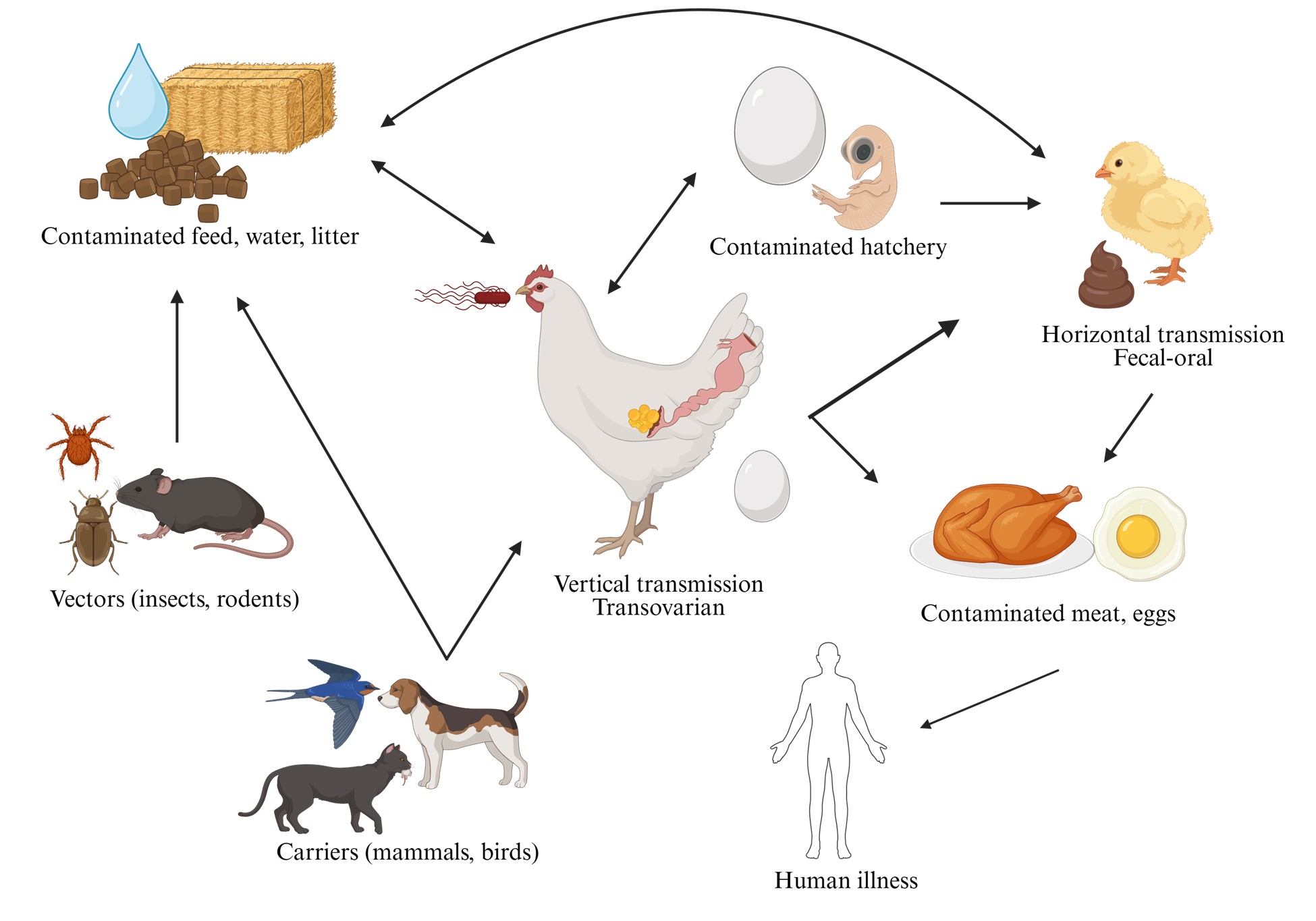
- Contaminated meat and eggs are the major sources of human Salmonella infection
- Transmission can be vertical or transovarian and horizontal or fecal-oral
- Carrier animals (dogs, cats, birds), insects (mites, beetles), contaminated poultry litter, feed, water and aerosol transmission
- Vaccination and feed additives (prebiotics, probiotics, synbiotics, bacteriophages) used to alleviate Salmonella in poultry
- Safe, broad and long-term protection still required