

Francis Ferri
Electrical and Computer EngineeringDoctoral researcher in the Ko Lab. His research develops efficient deep learning for computer vision, including pose estimation for animal monitoring and livestock welfare.
Research
Francis builds computer vision systems that replace subjective, manual welfare assessment with automated measurement, working with veterinary collaborators at the University of Saskatchewan and the Prairie Swine Centre.
Publications
Computer vision system for assessing pig welfare indicators on carcasses
F. Ferri, Y. Wang, R. Ko, J. Yepez, M. Lagoda, Y. M. Seddon, S.-B. Ko. Veterinary and Animal Science, 2026.
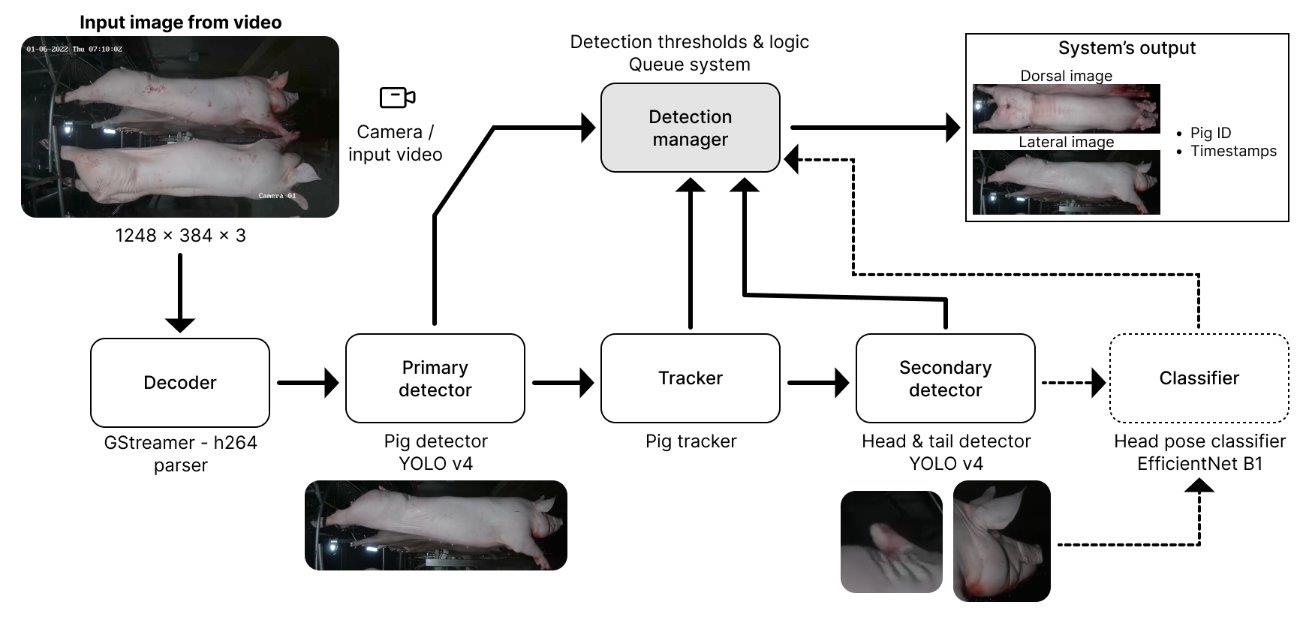
- Assessment at slaughter covers far more animals than on-farm inspection, which is subjective, slow and a biosecurity risk
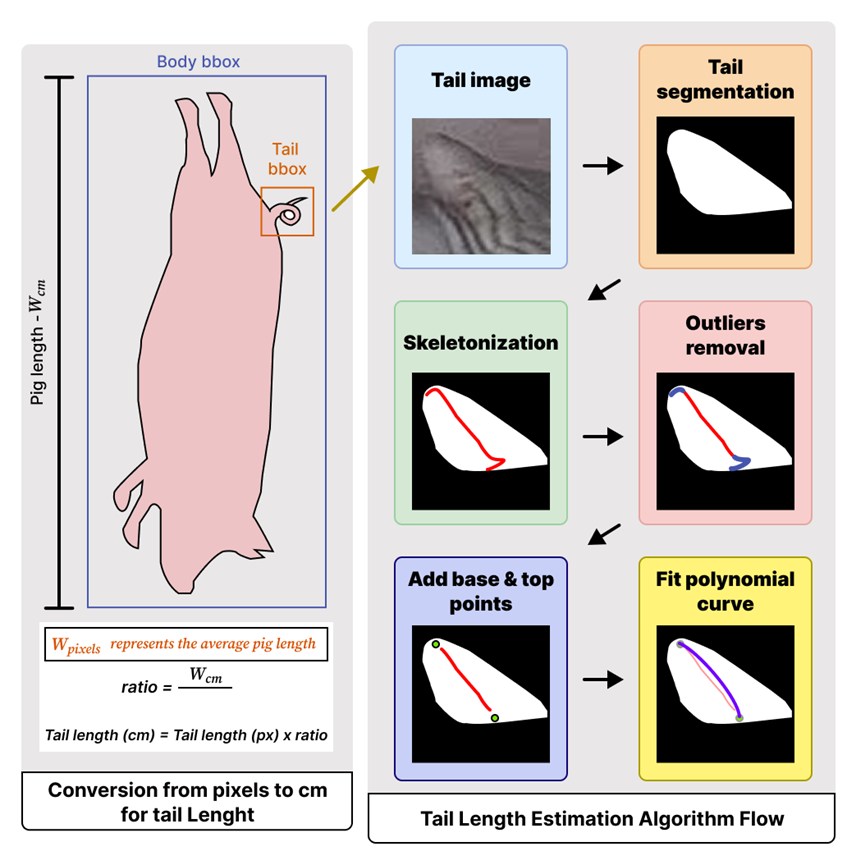
- A modular pipeline of YOLOv4 detection, U-Net segmentation, and colorimetric and geometric analysis scores skin lesions, tail lesions, tail length and hernias
- 93.0% accuracy on hernias, 86.3% and 90.4% on dorsal and lateral skin lesions, 86.8% on tail lesions
- Tail length is estimated by segmentation and curve fitting, to within 4.45 cm RMSE, with the whole system running at 30.31 frames per second
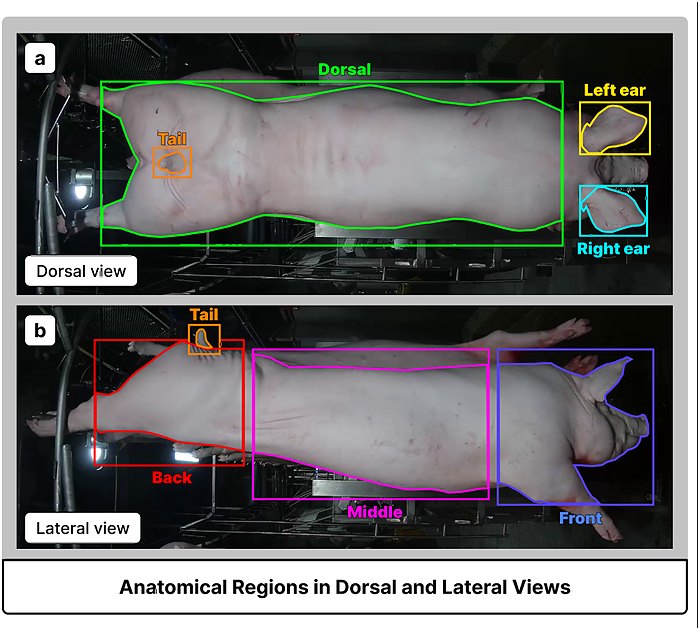
Automated detection and imaging of dorsal and lateral carcass views
F. Ferri, J. Yepez, M. Ahadi, Y. Wang, R. Ko, Y. M. Seddon, S.-B. Ko. Computers and Electronics in Agriculture, 222, 109058, 2024.
- Captures both dorsal and lateral views of each carcass as it passes the camera, so no indicator is missed to occlusion
Instance-aware coordinate attention for efficient pig pose estimation
F. Ferri, M. Mostafavi, B. Predicala, S.-B. Ko. Preprint, 2026.
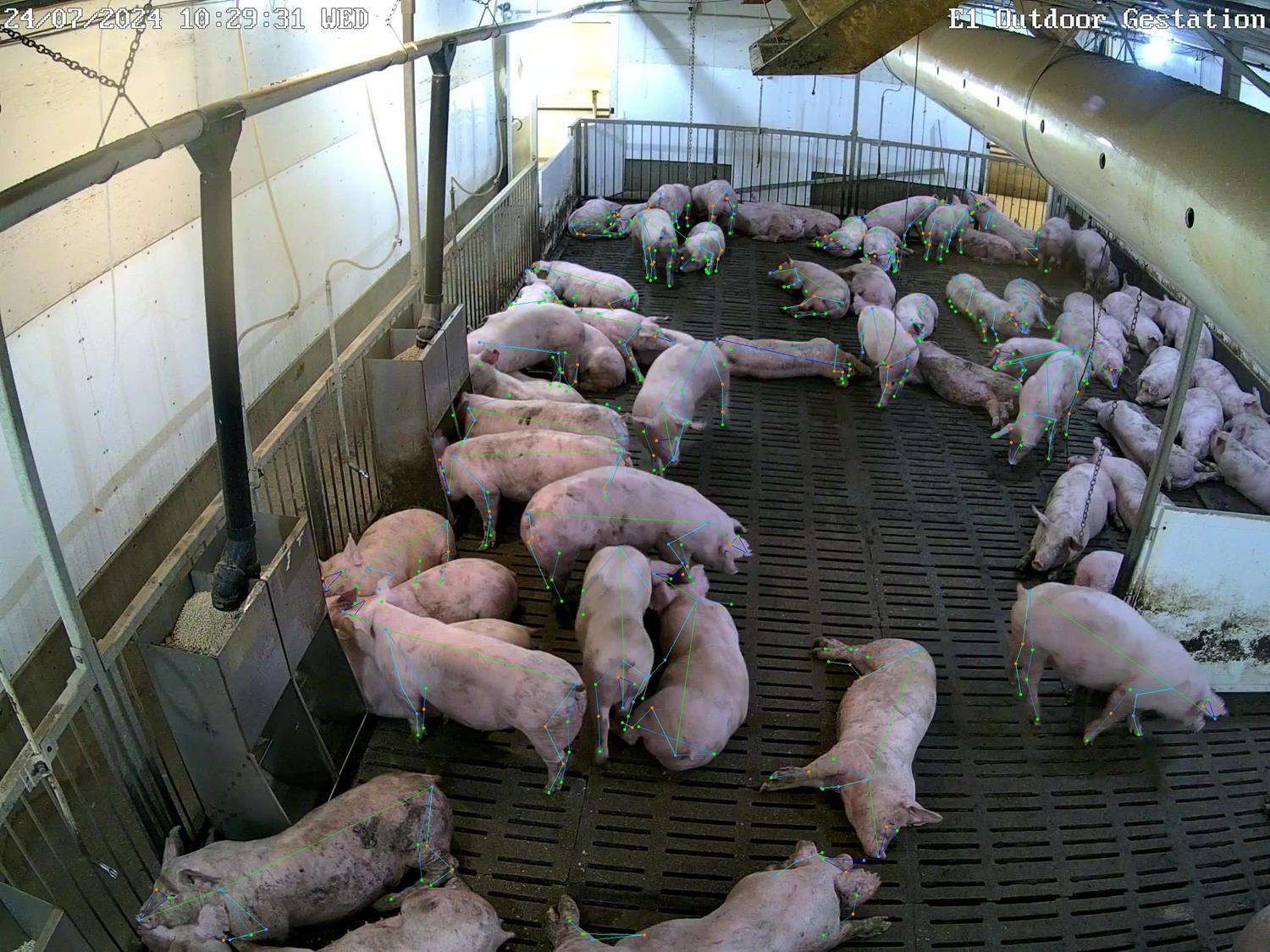
- Occlusion, overlapping animals and varying body shapes make multi-instance pig pose estimation hard
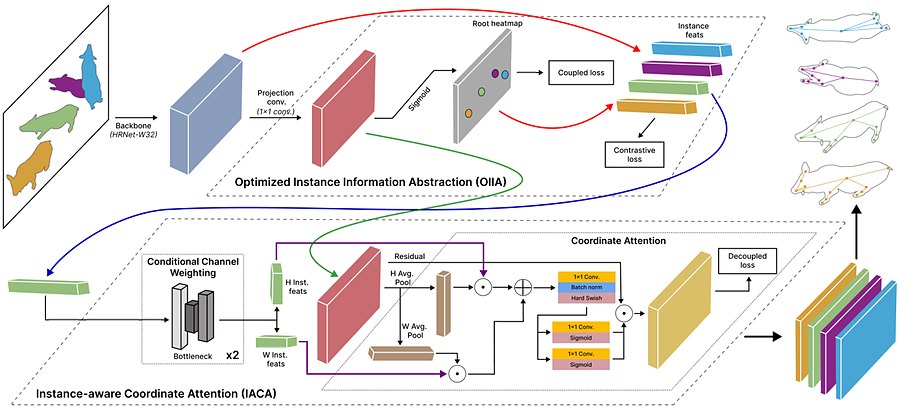
- A lightweight instance-aware head replaces the usual heavy backbone dependence, using Coordinate Attention and Conditional Channel Weighting
- Accuracy comparable to CiD with 68.09% fewer FLOPs
Lightweight network for anterior mediastinum segmentation
S. Soleimani-Fard, W. G. Jeong, F. Ferri, H. Sasani, Y. Choi, S. Deiva, et al. Neural Computing and Applications, 37(27), 22875-22889, 2025.
- A U-shaped convolutional network with an attention mechanism, kept small enough for clinical deployment