Dr. Hamish Haider PhD
Electrical and Computer EngineeringPostdoctoral Fellow in the Ko Lab. His research develops efficient transformer and large language model compression techniques, including quantization and pruning, to enable deep learning on resource-constrained hardware.
Research
Hamish designs the arithmetic that deep learning runs on: multipliers and compute units that trade a little exactness for large savings in energy and area, and hardware that makes privacy-preserving training practical.
Publications
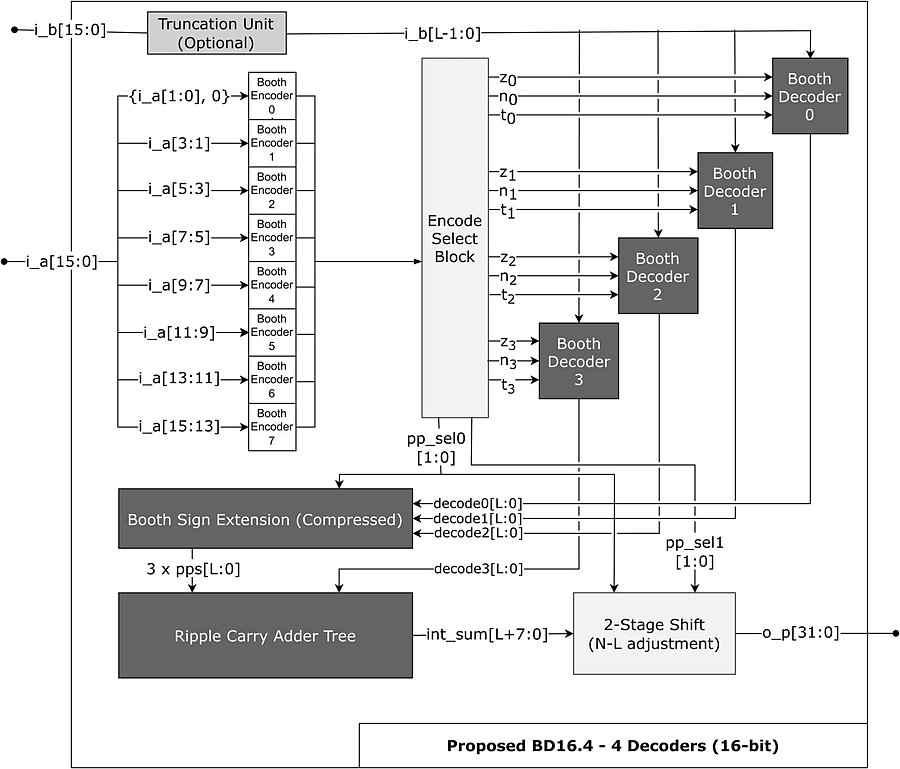
Decoder reduction approximation scheme for Booth multipliers
M. H. Haider, H. Zhang, S.-B. Ko. IEEE Transactions on Computers, 73(3), 735-746, 2024.
- Approximate Booth multipliers had fallen behind truncation-based approximate logarithmic multipliers; this scheme closes the gap
- Uses only N/4 Booth decoders instead of the traditional N/2, at negligible error rates
- The 16-bit BD16.4 design cuts normalised mean error deviation by 96.5% and power-area product by 69.6% against a state-of-the-art approximate logarithmic multiplier
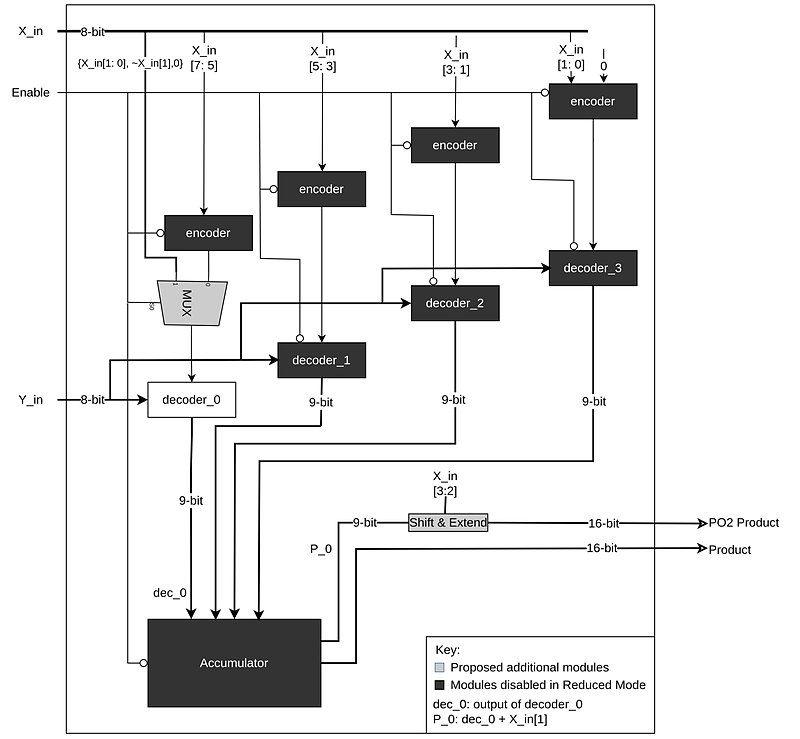
Booth encoding-based energy-efficient multipliers for deep learning
M. H. Haider, S.-B. Ko. IEEE Transactions on Circuits and Systems II: Express Briefs, 70(6), 2241, 2023.
- A re-encoding scheme that combines Booth encoding with power-of-two quantization to shrink network weights
- Model size down 30.77% for a CNN and 49.86% for a linear network, with minimal accuracy loss
- Inference energy down 50.6% for the CNN and 90.1% for the linear network
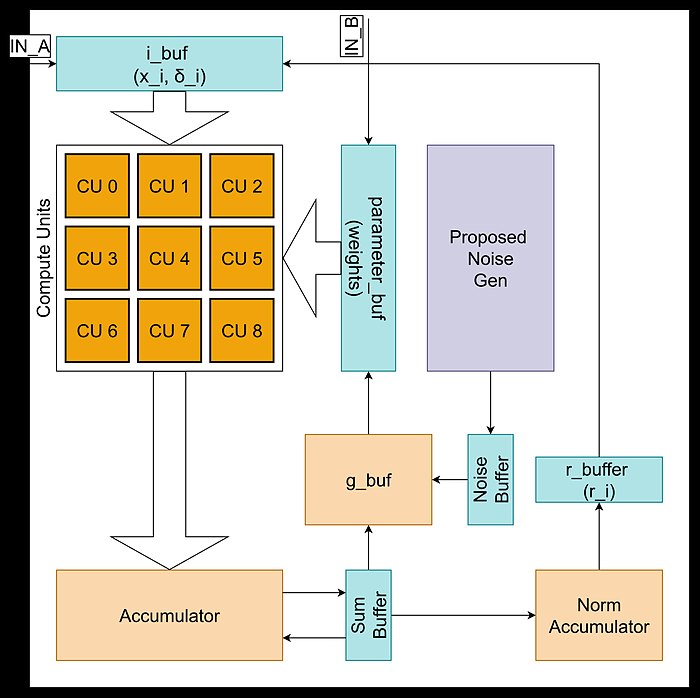
Memory-efficient differential privacy accelerator
M. H. Haider, N. Kim, H. Zhang, J. Arias-Garcia, H. J. Lee, S.-B. Ko. IEEE Asia Pacific Conference on Circuits and Systems (APCCAS), 2025.
- Generates the Gaussian noise in line rather than moving it through memory, which is where the overhead usually goes
- Controlled clock phase mismatches induce metastability in flip-flop arrays, and that entropy becomes the noise source
- Paired with an approximate computation unit, implemented on FPGA and modelled as a PyTorch extension
Power-efficient and reconfigurable compute unit for multi-precision AI inference
M. H. Haider, H. Zhang, S.-B. Ko. IEEE International Symposium on Circuits and Systems (ISCAS), 2026.
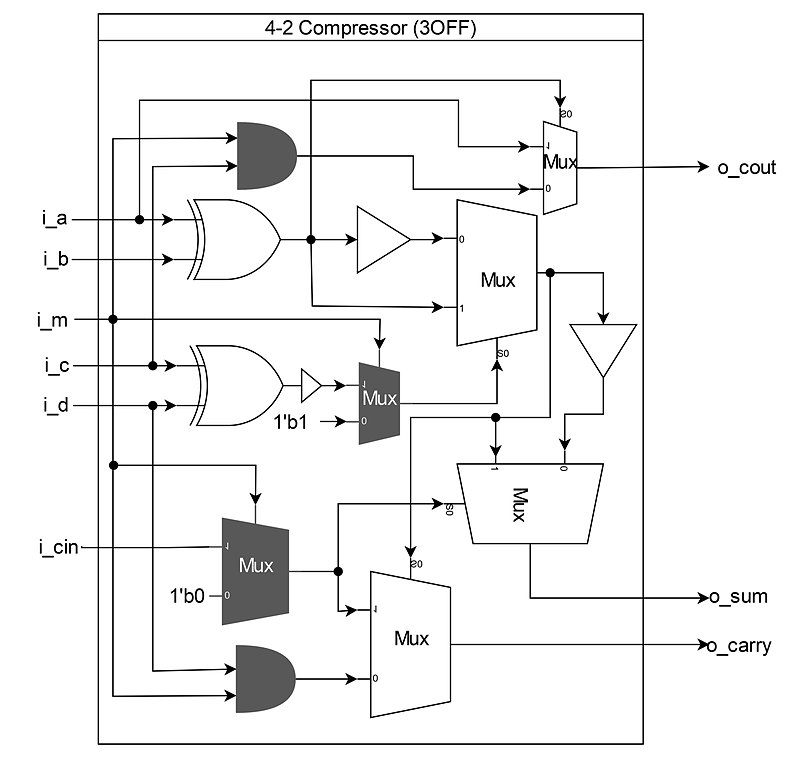
- Fitting several fixed-precision multipliers and using one at a time is wasteful: the largest dominates the critical path and caps the clock
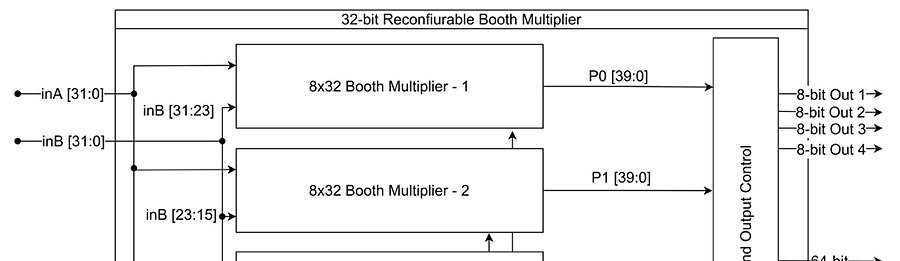
- R4RC16 and R4RC32 instead reconfigure at run time between a low-power 8-bit mode and a default 16- or 32-bit mode
- In low-power mode, up to 7.6 times the energy efficiency of state-of-the-art approximate logarithmic multipliers and 13.8 times that of approximate Booth designs
Reconfigurable multi-precision multipliers for CNN acceleration
M. H. Haider, H. J. Lee, S.-B. Ko. International Journal of Contents, 21(4), 2025.
- Targets edge computing, IoT devices and mobile platforms, where energy efficiency and throughput both matter
FFT-based deep learning for combustion instability prediction
S. Valarezo-Plaza, A. Erazo, M. H. Haider, J. Bae, P. Canteenwalla, S. Yun, S.-B. Ko. International Journal of Hydrogen Energy, 2026.
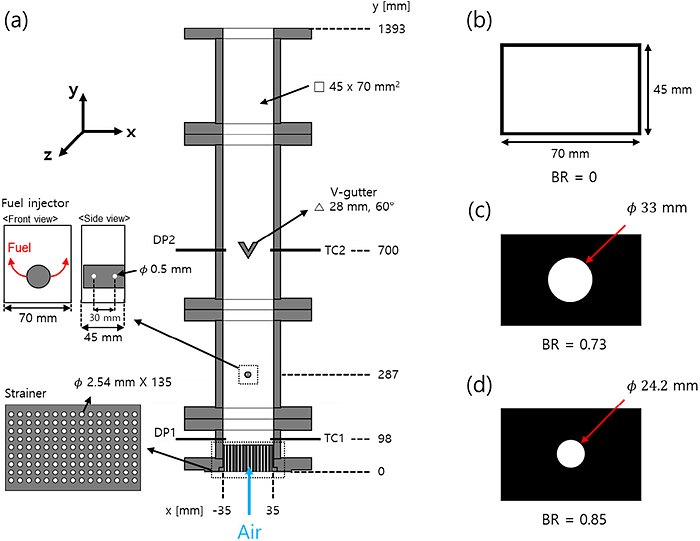
- Two LSTM models compared: one on time-series pressure and heat release rate, one on frequency-domain features from an FFT
- Measured across power levels of 15-30 kW, hydrogen content from 0% to 80%, air flow of 400-600 slpm and three downstream blockage ratios
An introduction to AI for clinicians
S. B. Lee, A. B. Carter, M. H. Haider, S.-B. Ko. Interactive Journal of Medical Research, 2026.
- A tutorial written for practising clinicians on what AI is already doing in medicine and what is coming