Sayed Muhsin
Electrical and Computer EngineeringDoctoral researcher in the Ko Lab. His research focuses on the compression and acceleration of AI models, including efficient transformers and channel decoders.
Research
Sayed works on making large models cheap enough to train, fine-tune and run on constrained hardware, and on the high-throughput error-correcting decoders used in satellite communication.
Publications
LYRA: low-frequency rank adaptation via factored DCT coefficients
S. Muhsin, S.-B. Ko. IEEE Signal Processing Letters, vol. 33, 2026.
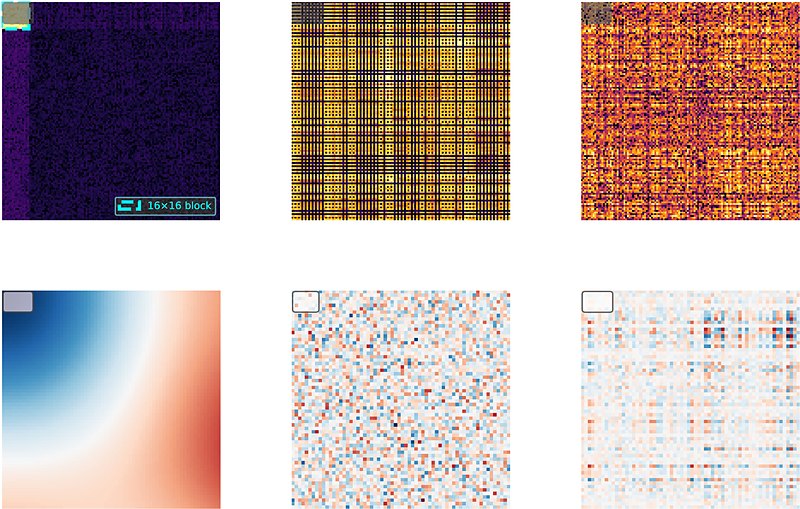
- Parameterises each weight update with a small set of low-frequency 2D discrete cosine transform coefficients, chosen separately along each axis
- That separable structure allows a factored forward pass of three small matrix multiplications, avoiding the dense inverse transform FourierFT needs at every step
- On GLUE and SuperGLUE with BERT-base and RoBERTa-base it matches FourierFT at identical parameter and optimizer-memory budgets, with the lowest peak GPU memory of every method tested
Optimized transformer models: pruning and quantization for the edge
M. H. Haider, S. Valarezo-Plaza, S. Muhsin, H. Zhang, S.-B. Ko. IEEE International Symposium on Circuits and Systems (ISCAS), 2024.
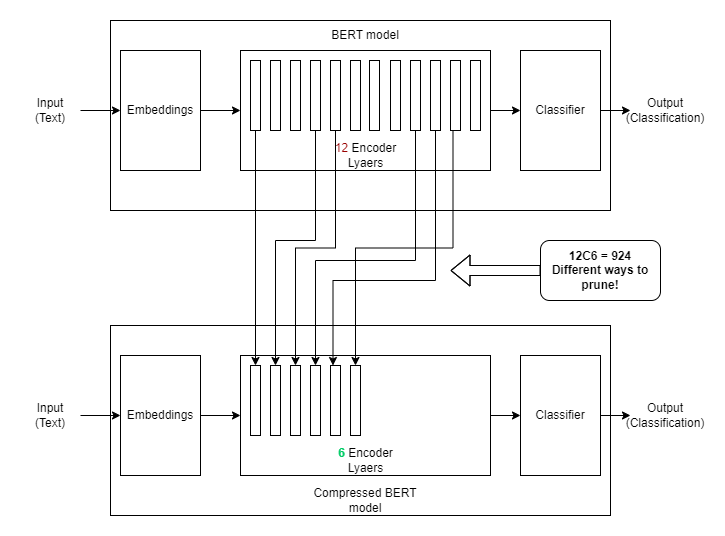
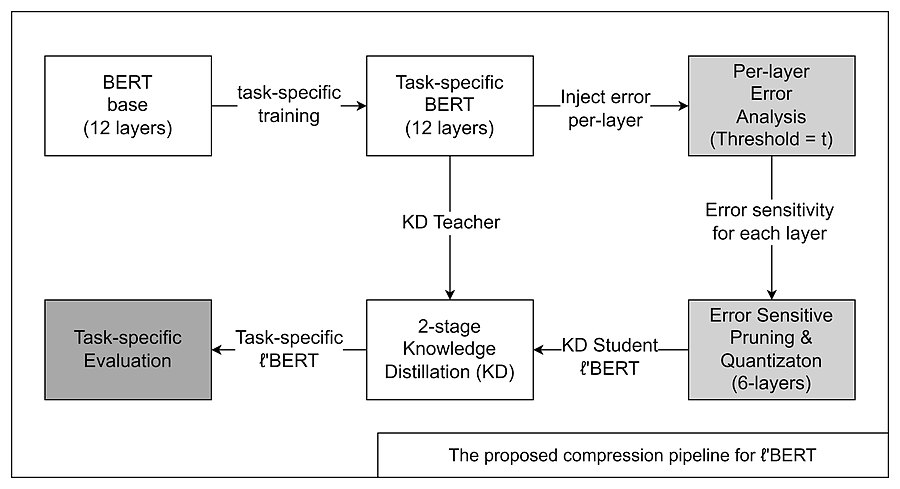
- Pruning and quantization were designed for CNNs and do not transfer to transformers automatically, because the computation patterns differ
- A comparative analysis of what does carry over, aimed at real-world edge deployment
- Large gains in compression ratio while transformer accuracy holds
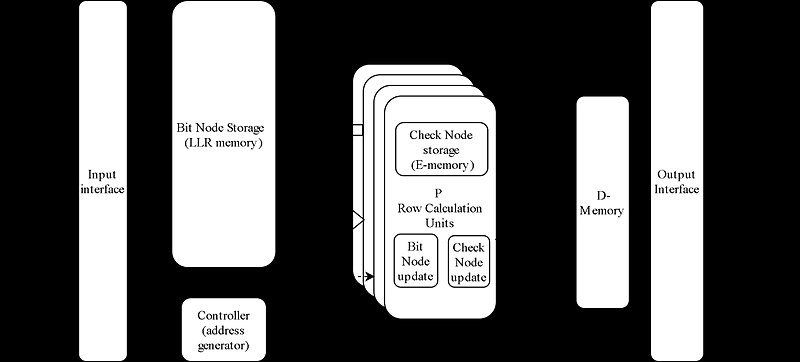
A high-throughput QC-LDPC decoder for near-earth satellite communication
K. M. S. Nampoothiri, K. N. Menon, S. Muhsin, S. Manoj, S. P, D. K. J, D. P. P. National Institute of Technology Calicut.
- Decoder architecture for the (8176,7154) quasi-cyclic LDPC code recommended by the CCSDS for near-earth applications
- Shift-register memory circuits and a pipe-stage forwarding mechanism avoid memory conflict, which allows the core processing unit to be heavily pipelined
- 2.65 Gbps at ten iterations on a Xilinx XCVU9P FPGA, clocked at 253 MHz