


Mohammadreza Mostafavi
Electrical and Computer EngineeringPhD student in Electrical Engineering (2024-present), supervised by Prof. Seok-Bum Ko. His research focuses on biomedical signal and image processing, and on vision-based livestock monitoring systems using artificial intelligence and computer vision.
Research
Mohammadreza works on biomedical signal processing, asking how much can be read from as little recording as possible, and on vision-based monitoring of livestock.
Publications
EEG-based biometric authentication through motor imagery
M. Mostafavi, A. Ayatollahi, S. Rajagopal, S.-B. Ko. Signal, Image and Video Processing, 19:1252, 2025.
- EEG is attractive for authentication because it resists spoofing and cannot be taken under coercion
- On the BCI IV 2a dataset, participants imagine moving the right hand, left hand, both feet or the tongue
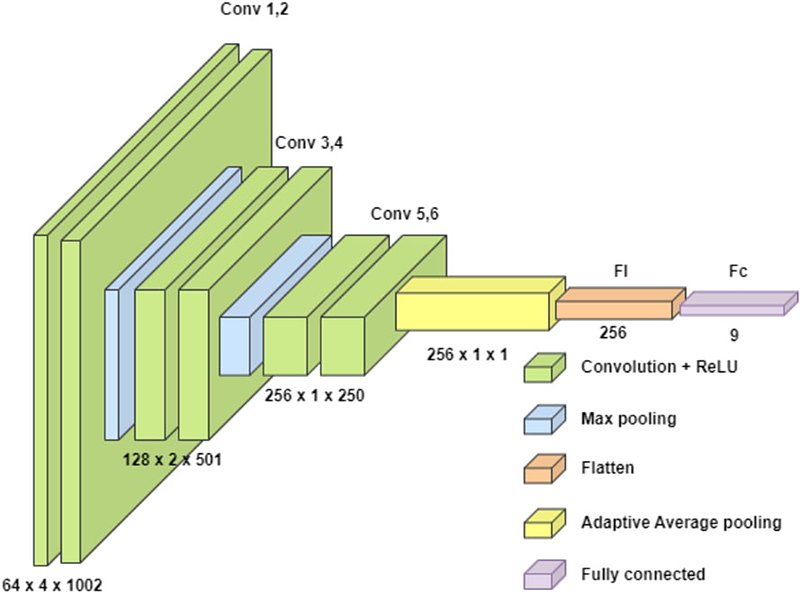
- A 2D convolutional network with six layers plus self-distillation; channel-wise kernels pick up localised spatial features and the relationships between channels
- Best results came from combining frequency bands with the full channel set and a four-second window
Detecting schizophrenia from a single EEG channel
M. Mostafavi, S.-B. Ko, S. B. Shokouhi, A. Ayatollahi. Physical and Engineering Sciences in Medicine, 48:3-18, 2025.
- People with schizophrenia often lack awareness of the condition, which makes timely diagnosis both harder and more valuable
- The goal is automatic diagnosis from minimal input: one EEG channel, converted to scalogram images
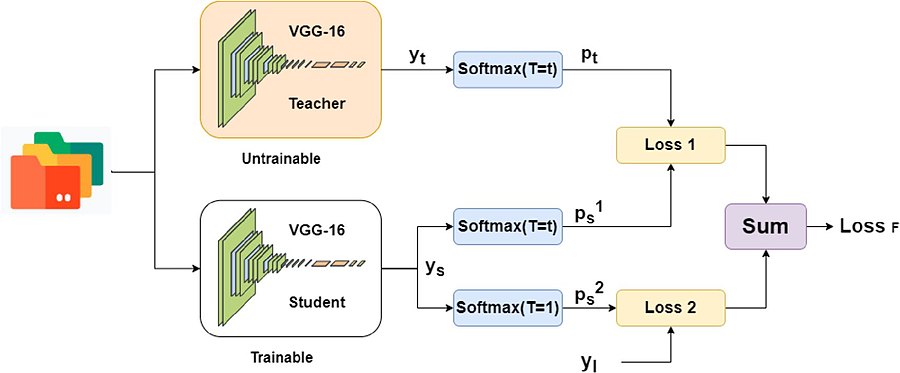
- Transfer learning combined with knowledge distillation keeps accuracy despite the reduced input
Instance-aware coordinate attention for efficient pig pose estimation
F. Ferri, M. Mostafavi, B. Predicala, S.-B. Ko. Preprint, 2026.
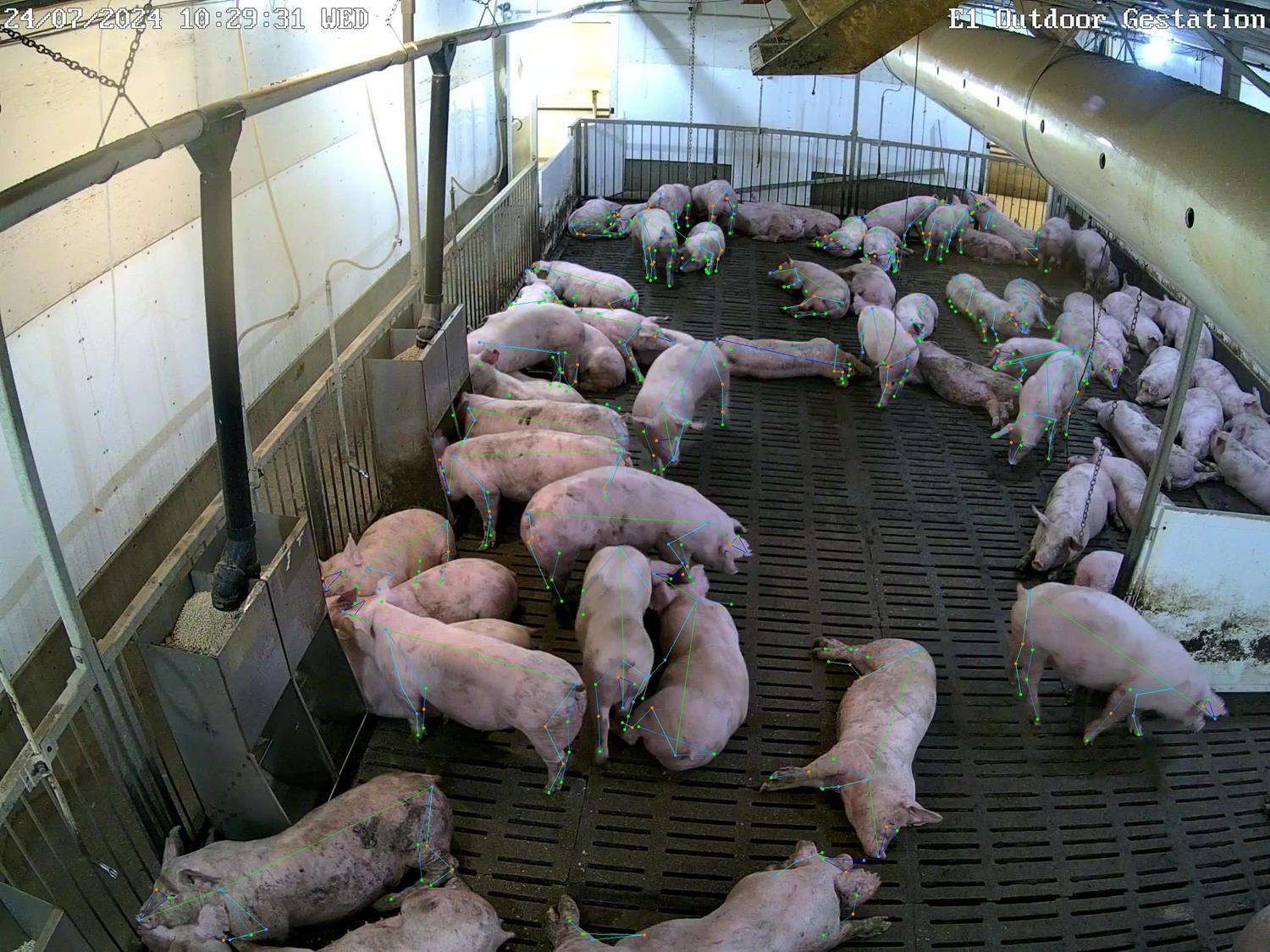
- Existing multi-instance methods lean on heavy backbones such as HRNet and underuse the features they produce
- A lightweight instance-aware head uses Coordinate Attention for spatial-channel dependencies and Conditional Channel Weighting for instance-specific modulation
- Accuracy comparable to CiD with 68.09% fewer FLOPs